Blank Price Tags on Real Vinyl: The $2 Experiment That Taught Me More About Fans Than Spotify Ever Did
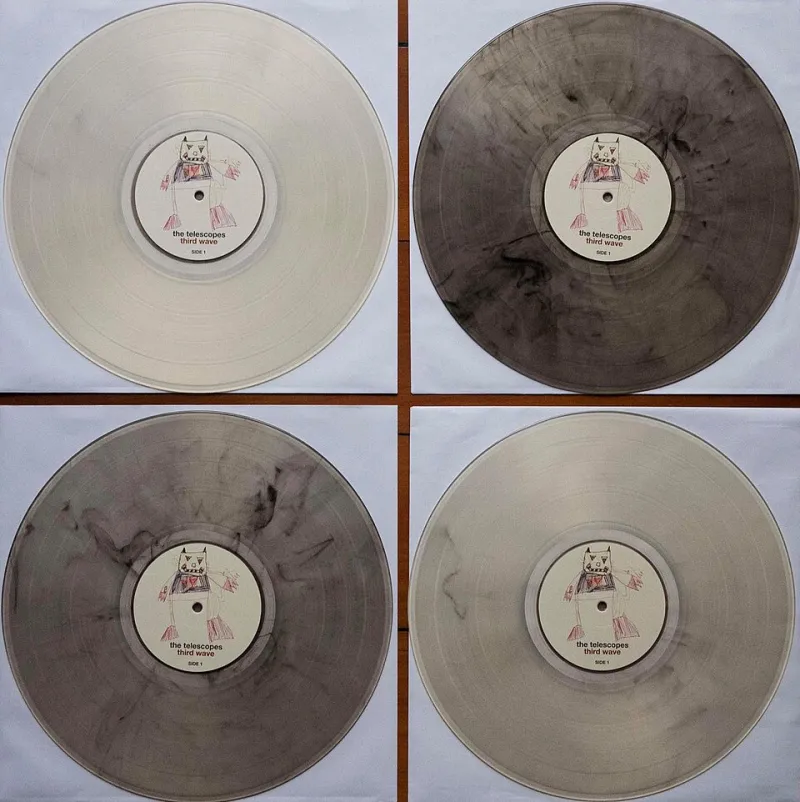
Photo: NEXUS6N6MAA10816, CC BY-SA 4.0, via Wikimedia Commons
Here's the setup: I had 50 records. Actual vinyl. Seven-inch pressings of a song I recorded in my garage, with artwork I silkscreened myself on a card table that folds in half. Streaming pays me roughly a rounding error per play, so the plan was to sell these directly, at whatever price people wanted to pay.
Not pay-what-you-want digital. Pay-what-you-want vinyl. A physical object you can hold, with a blank square where the price should be, and a Sharpie next to it for good measure.
The catch — or the carrot, depending on your tax bracket — was this: anyone who paid over $20 got a personalized voice memo from me. Their name, said out loud, into a microphone, sent to their phone. That's it. That's the whole reward. No bonus track, no signed lithograph. Just me, saying your name, probably slightly too enthusiastically.
The Economics of Letting Strangers Price Your Soul
I want to be honest about the math first, because the math is stupid.
Pressing 50 seven-inches cost me about $640. Shipping supplies, another $90. The silkscreen ink I already had, but my hands were blue for a week, which has to count for something. If everyone paid the break-even price of about $15, I'd walk away with nothing but heavy arms and a lesson.
What actually happened over the three weeks the records were up: the average payment landed at $23.40. Fourteen people paid over $40. One person paid $150 and got a voice memo so sincere I nearly teared up recording it. Six people paid nothing at all, which — honestly? Fair. I respect the audit.
But the average is a lie the way averages always are. The real story was in the outliers, and one outlier in particular.
The Two-Dollar Man
A guy from Ohio — I'll call him Randy, because that's his name — paid exactly $2.
Under the rules, $2 doesn't earn a voice memo. It barely earns a record; after shipping, I lost about $5 on Randy. He knew this. He included a note with his order that I've now screenshotted and will keep forever:
I know I'm below the memo threshold. I just want you to know I've been listening to this song on repeat while I drive a forklift, and $2 is what I've got this week. Don't lose money on me.
Don't lose money on me. Randy.
I recorded the memo anyway. I said his name, thanked him for the forklift detail, and told him the record was on its way. He replied with a photo of the vinyl sitting on his dashboard next to a thermos, and I have genuinely never felt more famous.
Here's what nobody tells you about experiments like this: the person who pays the least can end up mattering the most. Randy's $2 came with more emotional information than the $150 order did. The $150 buyer (bless them, truly) bought a cool record. Randy bought a cool record and budgeted for it and worried about my margins. That's not a transaction. That's a relationship.
Why Physical Media Still Punches Above Its Weight
I expected most people to treat this like a novelty. What I didn't expect was how seriously people took the blank price tag.
Multiple buyers emailed me asking what a "fair" price was, as if the blank space had created a moral crisis. One woman paid $25 and apologized for it being low — it wasn't. A teenager paid $18 in the form of a money order, which I didn't know people could still do, and which my bank teller also did not know people could still do.
Compare that to streaming, where my most-played song last year earned me enough for a modest lunch, and where the listener is completely invisible to me. I don't know who they are. I don't know if they loved it or left it on while doing dishes. The vinyl experiment, by contrast, gave me 50 little dossiers on actual humans: their names, their cities, their forklifts.
There's something about a physical object with a blank price that turns a purchase into a conversation. Digital pricing is a take-it-or-leave-it number set by a platform. A blank tag on a record you can hold is an invitation to decide what the thing is worth to you, and then to tell me about it.
What I'd Do Differently (and What I'd Do Exactly the Same)
The mistakes: I underpriced my shipping estimate by about $3 a record, because USPS has feelings about vinyl thickness that I did not anticipate. I also learned that recording 40+ personalized voice memos takes a genuine emotional toll — by memo 30 I was sounding less like a grateful artist and more like a hostage reading a script. Batch them. Hydrate between memos. Vary your openings.
But the core mechanic — blank tag, bonus at $20 — I'd keep untouched. It sorted my audience into exactly the tiers that matter: the curious, the generous, and the Randys. And of the three, the Randys are the ones I'm building this whole D.G. Off thing for. The person who gives what they can and asks you not to lose money on them is the person who shows up to the next thing, and the thing after that.
The record is a souvenir. The blank price tag is the actual product.
The Takeaway, If You're Stealing This Idea
Go ahead — steal it. The formula is simple: make something physical, remove the price, attach a reward that costs you nothing but sincerity, and set the threshold low enough that generosity feels optional but noticed.
And if someone pays $2 and includes a note about their forklift?
Record the memo anyway. Lose the five dollars. That's the cheapest marketing you will ever buy.