My 82-Year-Old Bookkeeper Grandma Ran My Art Prices for a Month. She Showed No Mercy.
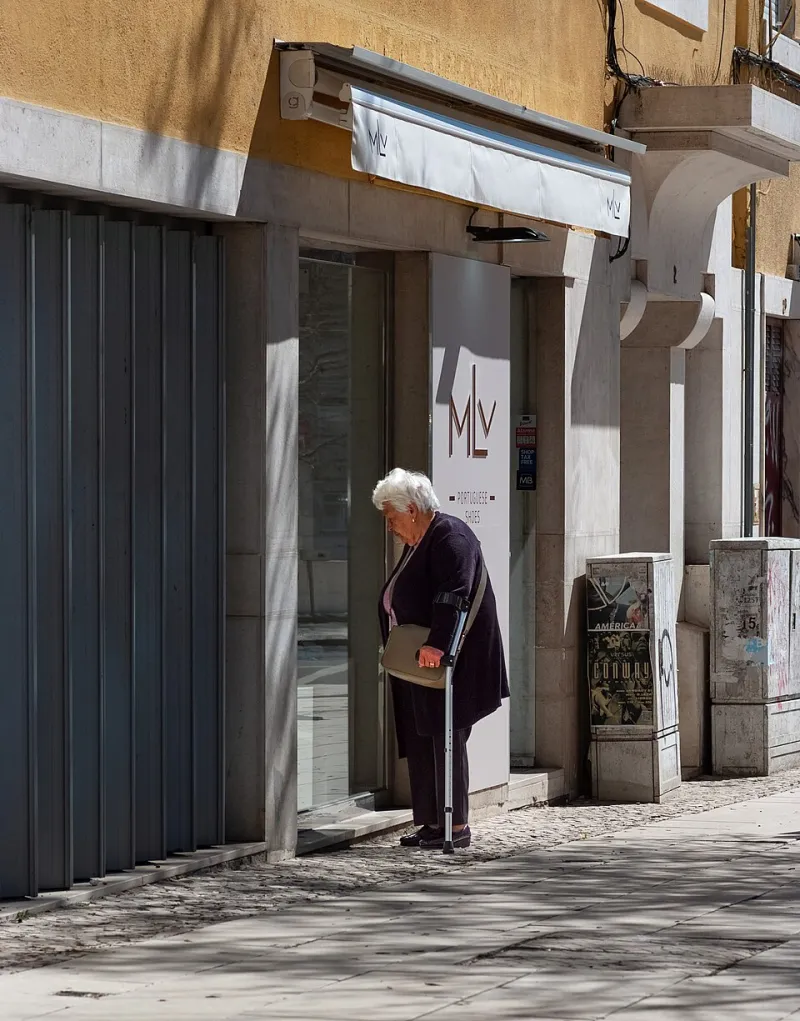
Photo: Jules Verne Times Two, CC BY-SA 4.0, via Wikimedia Commons
Every artist I know has a number problem. Not a talent problem, not a hustle problem — a number problem. We stare at a finished piece, we do the weird mental gymnastics (hours times... what, exactly? Feelings per square inch?), and we land on a price that's either embarrassingly low or so high we apologize while saying it out loud.
I've been stuck in that loop for years. So when I visited my grandma Ruth in her Ohio winter — a retired bookkeeper who spent forty years running ledgers for a farm equipment dealership — I complained about it over her famous ham and bean soup. She set down her spoon and said the most dangerous sentence in the English language:
"Sounds like you need somebody sensible handling that. Give me a month."
So I did. For the entire month of March, Grandma Ruth set every price on every piece of my work that sold. And honestly? She was ruthless. But not in the way I expected.
The Rules of the Experiment
Before I handed over the keys, we set ground rules, because I'm not completely reckless:
- She set the price on every original, print, and commission inquiry that came in.
- She could see my past prices and my cost of materials, but I couldn't veto her numbers.
- All negotiations went through her — over email, in her signature style: full sentences, perfect punctuation, and zero emojis.
- If a deal fell apart because of her pricing, I had to live with it.
She accepted the terms by printing the email, signing it, and mailing me a physical copy. I love this woman.
Week One: The Ledger of Truth
Ruth started the way any good bookkeeper would — with data. She asked for my material costs, my shipping expenses, my Etsy and Square fees, and how many hours each type of piece typically took. Then she built a spreadsheet. A genuinely beautiful spreadsheet, with color-coded tabs and a column labeled "ACTUAL PROFIT (NOT IMAGINARY)."
That column was a gut punch.
When she factored in the frames I never accounted for, the packaging materials, the gas driving pieces to the UPS Store, and the platform fees, a bunch of my "fair" prices were basically charity work. One 16x20 acrylic that I sold for $180 last year? After real costs, I made about $4.10 an hour. Ruth highlighted that row in yellow and wrote "BLESSED HIS HEART" in the notes field.
Week Two: The Awkward Conversations
Here's what I didn't anticipate: watching a retired bookkeeper negotiate with art buyers is like watching a golden retriever herd sheep. Instinctive. Calm. Absolutely relentless.
A collector who'd bought from me before emailed asking for "the usual friend discount" on a new piece. My old self would have knocked off 20% and thanked him for the opportunity. Ruth replied: "The usual friend price is the listed price. I've enclosed a 10% off coupon for your next purchase, as is customary."
He bought it at full price. He used the coupon the following month.
Another inquiry came from a small business owner who wanted a commission and opened with "what's your lowest?" Ruth's response, which I have framed in my studio now: "My lowest is the price. My highest is also the price. It's one price. It keeps things simple."
I died. The client laughed, paid the deposit, and told me later that dealing with her was "the most refreshing part of my week."
Week Three: The Plot Twist
I assumed a bookkeeper's instinct would be to price everything low — move inventory, keep the books tidy. The opposite happened.
Ruth priced my work higher than I ever had. Her logic was pure and unburdened by art world anxiety: "People treat cheap things cheaply. You don't haggle with the hardware store over a hammer, and you don't leave a hammer in the garage because it got rained on. Price it like it matters and people will treat it like it matters."
She was right in a way that stung. The pieces she priced 30-40% above my comfort zone sold at nearly the same rate as everything else. One buyer emailed asking if the higher price meant the work was "getting more collectible." Ruth, bless her, replied: "The price reflects what it costs to make it properly and keep the lights on. The collectibility is your business."
What an Outsider's Logic Reveals
Sitting in her kitchen on the last day of the experiment, she explained her philosophy over more soup, and it boiled down to three things creatives get wrong:
We price our feelings instead of our costs. Ruth never once asked what a piece meant to me emotionally. She asked what it cost to make and what my time was worth. Feelings can inform the work; they make terrible bookkeepers.
We treat discounts as kindness and full prices as confrontation. She flipped that entirely. To her, a fair price is the respectful transaction. Chronic discounting just tells buyers your first number was a lie.
We apologize with our prices. Every hesitant number I've ever quoted carried a hidden "...but I understand if that's too much." Ruth's numbers carried no such apology, and buyers didn't flinch, because confidence reads as competence.
The Aftermath
The month ended with eleven sales — roughly my usual pace — at an average of 35% higher than my old prices. Two deals fell through over her firmness. One of those buyers came back the next week at her number anyway.
Best of all, she's kept the spreadsheet. She updates it monthly now, unbidden, and emails it to me with subject lines like "MARCH LEDGER — IMPROVING."
Do I recommend handing your pricing to an 82-year-old with zero art world hang-ups? If you can find a Ruth, absolutely. You don't need her to be cold. You need her to be clear. The art world gave me a decade of overthinking; one bookkeeper gave me a spreadsheet and a single sentence I now tape above my desk:
"It's one price. It keeps things simple."