30 Days of Pay-What-You-Want: The Spreadsheet That Restored My Faith in Strangers
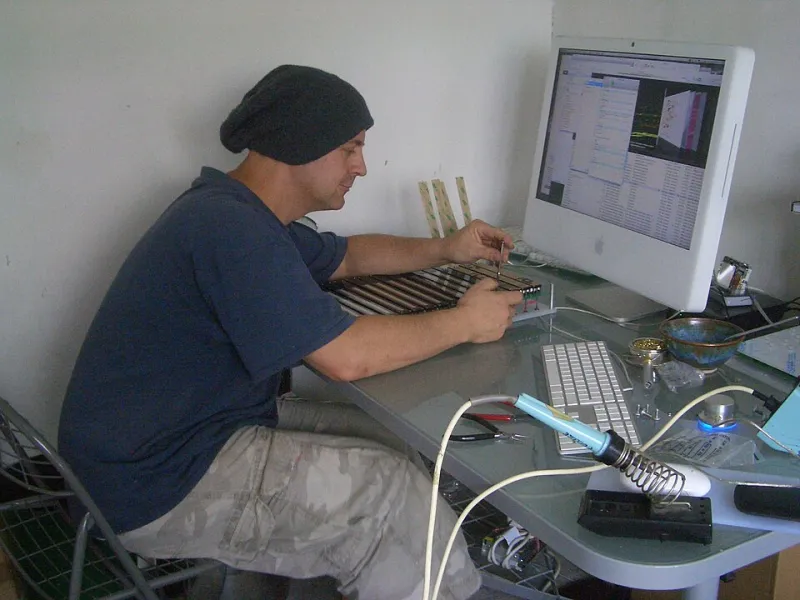
Photo: c-g., CC BY 2.0, via Wikimedia Commons
The Setup: No Prices, Just a Vibe
On the first of the month, I did something that made my accountant friend physically wince. I deleted every price from my shop. Prints, custom portraits, beats, the whole catalog — everything switched to "pay what you think it's worth."
No minimums. No suggested amounts. Just a blank box and a PayPal button.
The idea came from a conversation at a coffee shop in Portland, where a ceramicist told me her PWYW (that's pay-what-you-want, I learned, there's an acronym) weeks outperformed her fixed pricing. I didn't believe her. So I ran the experiment myself, tracking every single transaction in the same spreadsheet I use for grocery budgeting. Thirty days. Three product types. Zero price anchors.
Here's what happened.
Week One: The Silence Was Deafening
Nothing. For four days, my shop might as well have been a ghost town. Turns out a blank price box isn't liberating — it's terrifying. People don't want to insult you, and they really don't want to overpay. One person added a print to their cart, sat on the checkout page for two hours (I could see the abandoned cart), and left.
Then, on day five, the dam broke. A woman in Ohio paid $85 for a print I'd been selling for $40. EIGHTY-FIVE DOLLARS. Her note: "It's going above my fireplace and it's the first thing guests see. Felt right."
I stared at my phone for a solid minute. Then I updated the spreadsheet with shaking hands.
The Numbers, Because You Know I Counted
Over 30 days, I completed 41 transactions. Here's the breakdown:
Prints (19 sold): Average payment was $34. My old sticker price was $40. So people paid about 85% of list — better than I expected, honestly. Six people paid over the old price. Three paid under $10, including one $5 transaction that I'm choosing to believe came from a broke art student and not someone who just really lowballed me.
Commissions (9 sold): This is where it got interesting. Custom work averaged $210 against my old $250 rate. But two clients paid $400-plus, and one paid $500 for a pet portrait because, quote, "my dog deserved to live forever." Pet people, man. They will bankrupt themselves for their animals and I love them for it.
Beats (13 sold): The weakest category by far. Producers paid an average of $22 against my old $50 lease price. The beat-buying crowd, it turns out, is haggling culture incarnate. Several paid $10 or less. One person paid $100, god bless him, wherever he is.
Total revenue: $3,847. My previous 30-day average across the same products was $3,100. The experiment beat fixed pricing by about 24%.
The One Guy Who Took Advantage
I promised myself I'd be honest about this, so here it is. Week three, a buyer licensed a beat, requested "unlimited revisions" on a commission, then paid $8 total for what should've been a $250 package. He also asked if I could "throw in the layered files for exposure on his YouTube channel." His channel had 12 subscribers.
And here's the thing that surprised me: it didn't wreck me. In fixed pricing, that guy would've haggled me down to $150 anyway and I'd have spent the whole transaction resentful. In PWYW, he outed himself immediately. I knew exactly who he was, I delivered the minimum, and I moved on. One bad actor out of 41 transactions is a 2% jerk rate. I've worked worse freelance gigs with better-sounding clients.
The Psychological Toll Nobody Warns You About
The money was fine. The waiting was not.
Every time an order came in, I'd refresh the payment notification like a slot machine. When someone paid $15 for a print, I'd spiral: Is that what it's worth? Is that what I'm worth? Fixed pricing is a shield — whatever number you pick, the transaction isn't a referendum on your soul. Pay-what-you-want removes the shield. Every payment is feedback, and feedback at 11 p.m. hits different.
By week three, I'd developed a coping mechanism: I stopped checking payments until morning. That single habit change did more for my sanity than the entire revenue bump.
What I'm Doing Going Forward
I'm not going full PWYW forever, but I'm not going back to fixed pricing across the board either. Here's the hybrid I landed on:
- Prints stay pay-what-you-want with a small suggested amount. The data says trust wins here.
- Commissions get a floor — a stated minimum that filters out the $8 guys while keeping the generous ones generous.
- Beats go back to fixed pricing, because the beat market will haggle a price tag off a casket.
The big lesson isn't about money, though. It's that most people, given the chance to take advantage of a working artist, will instead pay you fairly — and a meaningful chunk will pay you more than you'd have dared to charge. I spent years treating customers like adversaries to be negotiated with. Turns out most of them were just waiting for permission to be generous.
Except that one guy. You know who you are.