My Entire Studio Cost Less Than an iPhone: A Room-by-Room Receipt Check
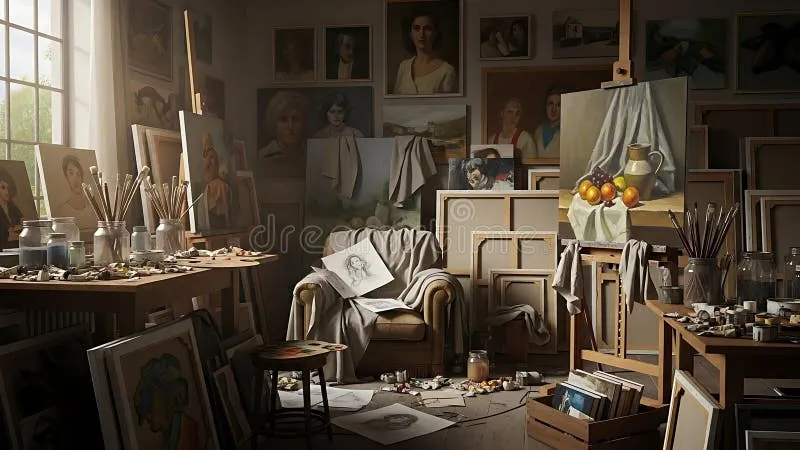
Photo: cluttered home art studio with secondhand furniture and easel, via thumbs.dreamstime.com
I did something last week that I'd been avoiding for years: I walked through my studio with a legal pad and wrote down where every single thing came from and what it cost. Not because I'm organized. Because a guy at a craft fair looked at my booth setup and asked, "What'd all that run you?" and I realized I had no honest answer.
The final number embarrassed me a little. Not because it's high. Because it's low. My entire creative operation—furniture, instruments, gear, lighting—cost less than a loaded iPhone. And roughly a third of it was literally sitting on the sidewalk when I found it.
Let me walk you through it.
The Corner Where the Magic Allegedly Happens
The drafting table. The centerpiece. The thing every studio tour photo needs. Mine cost $40 on Facebook Marketplace from a guy in a suburb whose wife "just wanted it gone by Sunday." It has a wobble in the left leg that I've never fixed because I've convinced myself it adds character. It does not. But I've made some of my best work on it, so the wobble stays.
The chair is from an office building in downtown that was liquidating. Twenty bucks. It's the most expensive seat in the room and it still smells faintly of corporate despair, which, honestly, fuels me.
The easel—the one in every photo I post—was on a curb. A full-size wooden easel, leaning against a trash can, with a handwritten "FREE" sign. I did a U-turn so fast my blinker gave up. I still don't know who that person was, but if you're out there: thank you, and I'm sorry I didn't donate anything that day.
The Gear Wall of Shame (and Pride)
Here's where the expensive-gear myth really falls apart. My audio setup:
- Audio interface, $99, bought refurbished
- One "good" microphone, $120, a birthday gift I didn't ask for
- One thrift store keyboard, $25, missing two keys I've never needed
- Monitors? A pair of $30 secondhand speakers that I've EQ'd by ear so many times I now know their flaws like old friends
Is that a professional setup? By spec sheets, no. By output? I've got finished records that came out of it. The recording doesn't care what the microphone cost. The recording cares whether the song was any good before you hit record.
Same story with the visual side. My brushes are a mix of clearance-bin finds and two "vintage" sable brushes I got in a box lot at an estate sale for $8 total. Half my palette knives are actual knives. From a drawer. In a kitchen. That I no longer cook in.
The Only Things Worth Full Price
I want to be fair here, because this isn't a screed against spending money. There are exactly three categories where I pay retail without flinching:
- Paint and mediums. Cheap paint is a lie you tell yourself twice—once at purchase, once when it cracks.
- Strings, cables, and anything with a moving part. The cheap ones break mid-session and cost you the thing you can't buy back: momentum.
- A decent desk lamp. Your eyes are the one tool with no replacement plan.
Everything else? The market for "slightly sad but functional" creative equipment is enormous and it's sitting in thrift stores across America right now, next to the bread machines nobody wanted.
What the Inventory Actually Taught Me
The legal pad didn't just give me a total. It gave me a pattern. Every expensive thing I've ever bought for this studio, I bought during a moment of anxiety—usually right before starting something big, as if the gear was the thing standing between me and the work. Every free or cheap thing, I bought (or rescued) during a moment of genuine curiosity.
That's the real myth, I think. It's not that great work requires expensive gear. It's that buying expensive gear feels like making progress, so we do it instead of the scarier thing, which is sitting down with what we already have and finding out whether the idea is any good.
The curb easel has outlasted two "upgrades" I sold at a loss. The wobbly table has carried every commission I've ever shipped. Meanwhile, the $300 stylus I once bought sits in a cup, barely used, a small monument to a Tuesday when I wanted to feel like a professional instead of become one.
So here's my challenge if you're building a studio on a budget: before you buy the next thing, inventory what you've got. Write it down. Look at the pattern. I'll bet your best work already knows which tools it likes—and I'll bet it doesn't care about the receipt.
The guy at the craft fair? I told him the truth. "Less than your phone." He didn't believe me. That's fine. The work believes me, and the work is the only witness that shows up every day.