Three Crafts, One Desk: Notes From a One-Person Studio That Never Sleeps
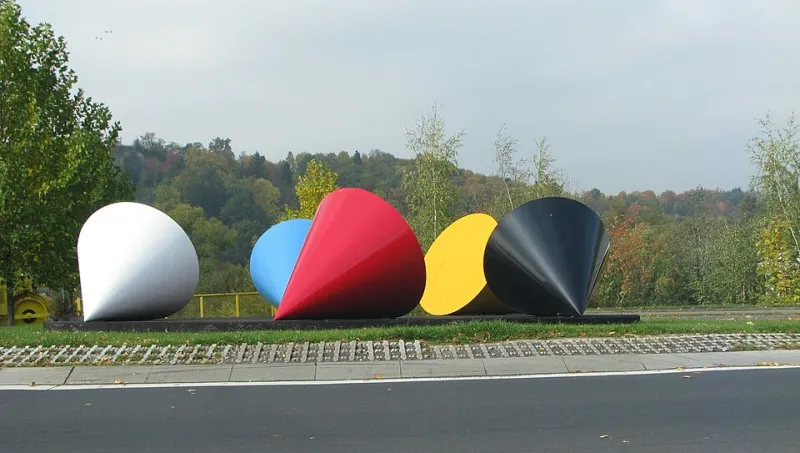
Photo: c-g., CC BY 2.0, via Wikimedia Commons
People ask me all the time how the whole thing works. One brain, three disciplines, zero employees. A Tuesday around here might start with a logo revision for a coffee roaster in Portland, slide into an afternoon of layering synths over a sketch of a rusted-out pickup truck, and end with me staring at a canvas wondering why I ever thought orange was a good idea.
It's chaos. But it's organized chaos, and after years of trial and error (mostly error), I've landed on a system that keeps the machine humming. If you're trying to run your own multi-hyphenate operation out of a garage, spare bedroom, or rented corner of a coworking space, this one's for you.
The Cross-Pollination Trick Nobody Talks About
Here's the secret sauce: the disciplines feed each other. I don't treat art, music, and design as three separate jobs. I treat them as one practice with three outputs.
That rusted pickup sketch I mentioned? It became a full painting, then the painting's color palette became a track on my last EP. I built the beat around the same visual rhythm—the way the rust bled into the chrome translated into how the bass bled into the hi-hats. Sounds a little woo-woo when I write it down, but it's real. When you work across mediums, every piece of work becomes raw material for the next one.
If you're a visual artist who's never touched music, or a musician who's never picked up a brush, you're sitting on a goldmine of cross-pollination you haven't tapped yet. You don't need to be good at the second medium. You just need to borrow its logic.
Client Work Funds the Weird Stuff
Let's be honest about money for a second, because nobody else in this space seems to want to be.
Original work rarely pays the rent. Album streams pay roughly enough for a nice dinner. Art prints move a few units a month if you're lucky. But design commissions—the album covers, the brand identities, the website mockups—those are the cash engine. And that's fine. That's the deal.
The trick is to stop resenting the client work and start seeing it as training. Every brand project sharpens my composition skills. Every revision round teaches me something about clarity. The commissioned work is the day job that makes the night job possible, and honestly, the night job would get precious and bloated without the discipline the day job enforces.
My rule: client hours happen in the morning, original work happens after. Never the other way around, because creative energy is a morning currency in this house and clients pay for it first.
The Systems That Keep Ideas Flowing
I'm not a systems guy by nature. I'd rather make a mess than maintain a spreadsheet. But a one-person studio dies without infrastructure, so here's what actually stuck:
- The capture notebook. Everything goes in one place—melody ideas, thumbnail sketches, client notes, a random phrase overheard at a diner in Albuquerque. One notebook, zero organization, reviewed weekly. The magic is in the review, not the filing.
- Hard mode switches. I physically move to a different chair, different playlist, different desk lamp depending on which discipline I'm working in. Sounds silly. Your brain learns the cues. It's like how you can't nap in jeans.
- The Friday dump. Every Friday I ship something publicly—a beat, a sketch, a design process shot. Imperfect, unfinished, doesn't matter. Shipping weekly kills perfectionism faster than any productivity book.
- One admin afternoon. Invoices, emails, tax receipts, all of it, batched into one block. Nothing kills a creative streak like remembering you haven't sent an invoice since March.
None of this is revolutionary. That's the point. The revolution is doing boring things consistently while the fun things stay fun.
Protecting the Edge
The biggest risk of running a smooth operation is that smooth becomes bland. Clients want safe. Algorithms want consistent. And if you're not careful, you wake up one day making beige work for beige audiences.
So I keep one rule that's non-negotiable: ten percent of everything I make—time, money, whatever—goes toward work that cannot be sold, cannot be explained, and might genuinely embarrass me. Weird sound collages. Paintings made with hardware store rags. Whatever the restless part of my brain demands that week.
That ten percent is the reason the other ninety has a voice. It's the reason D.G. Off Originals has "original" in the name and actually means it.
If you're out there trying to balance the crafts, the clients, and the chaos—keep the edge. The edge is the product. Everything else is just logistics.