The Painting I Kept Facing the Wall Just Sold to a Museum Gift Shop
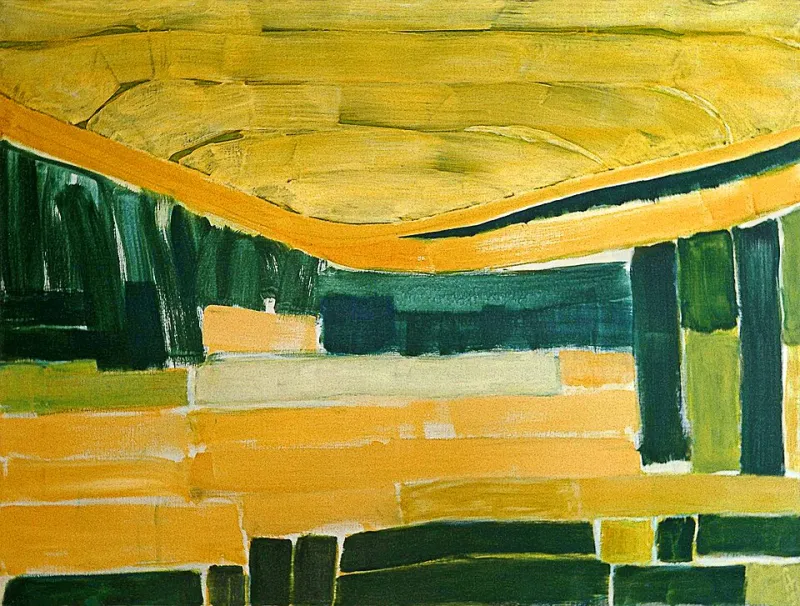
Photo: Fons Heijnsbroek, CC0, via Wikimedia Commons
Every artist has one. The piece you don't photograph, don't post, don't mention. For me it was a small acrylic landscape—maybe 16 by 20 inches—of a foggy morning over a lake in northern Wisconsin. I painted it in a single frustrated afternoon in 2021, hated it by dinner, and flipped it to face the wall in my studio, where it stayed for almost two years.
Last fall, at a craft fair in Ann Arbor, I hung it at the back of my booth, literally turned around, as a kind of private joke. A woman in a quilted jacket stopped, walked past everything I was proud of, and asked about the canvas facing the wall.
"That one's not for sale," I said. Smooth, right?
She turned it over anyway. It turned out she buys for the gift shop at a regional art museum—one of those lovely mid-sized institutions that anchors a downtown and sells prints, mugs, and yes, original work by local artists. She wanted that painting. The one I'd been quietly ashamed of.
The Taste Trap
Here's what shook me: I had spent two years treating my own judgment like fact. I decided that painting was bad, so it was bad, full stop. But taste isn't a verdict—it's a mood. It's what you ate that day, what you were trying to prove, which artist you'd been stalking on Instagram that week.
The buyer saw something I couldn't. She later told me the muted palette "felt like the lake in October," which is exactly the feeling I'd been chasing when I painted it and completely missed because I was too busy comparing it to the work in my head instead of the work on the canvas.
Stop Being Your Own Bouncer
Most of us gatekeep our own catalogs harder than any gallery ever would. We curate ruthlessly, and we mistake that curation for quality control. Sometimes it is. But a lot of the time it's just insecurity wearing a lanyard.
After that sale, I did something uncomfortable: I pulled five more wall-facing pieces out of storage and showed them to people whose opinions I trust. Two were genuinely bad—no rescue mission needed. One was mediocre. Two got real reactions. Real, actual reactions, from humans, in real time.
That's the data we never collect when we're alone in the studio making the call. We judge our work in a vacuum, against an imagined standard, with zero audience input. Then we're shocked when the audience disagrees.
What the Museum Buyer Taught Me
The weird lesson in humility wasn't that my painting was secretly good. Maybe it was, maybe it wasn't. The lesson was that "good" was never mine to determine in the first place. I make the work. Other people decide what it means to them. That division of labor is healthier than we like to admit.
A few practical takeaways from my humbling little saga:
- Flip the wall-facing pieces around once a year. Distance does strange, wonderful things. Work you hated in 2021 might be the best thing you made that year.
- Show the rejects to somebody. Not for validation—for calibration. You'll learn where your self-criticism is accurate and where it's just noise.
- Let the weird ones find their people. The painting I hated matched someone's October lake perfectly. Somebody out there matches every oddball piece you've got.
- Stop announcing your failures. I almost talked that buyer out of a purchase because I felt obligated to warn her. Don't do that. Let the work speak without your apology attached.
The Painting Lives in a Museum Now
Well—next to a museum. It hangs in the gift shop, priced at a number I wouldn't have dared ask for, with a little card next to it. People buy prints of it. Prints. Of the painting I wouldn't even look at.
I still don't love it. But I've stopped pretending that matters as much as I thought it did. The audience decides what deserves to exist. My job is just to keep making things and get out of the way.
The canvas that replaced it on the wall-facing spot in my studio? It's facing out these days. Humility, it turns out, is also a decent interior design choice.