Annotated Dispatches From My 3 A.M. Brain: A Field Guide to Shutting the Inner Critic Up
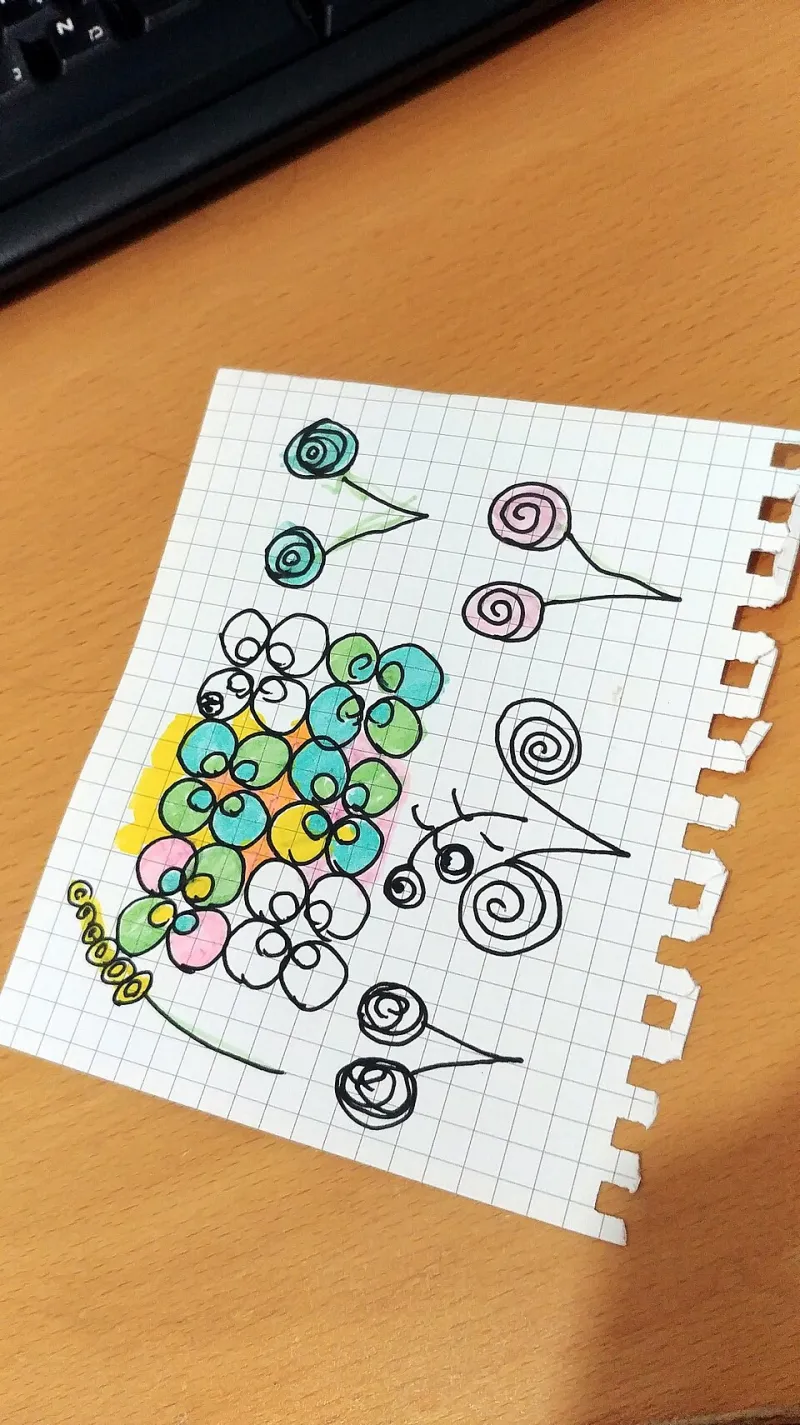
Photo: Chenspec, CC BY-SA 4.0, via Wikimedia Commons
The Evidence Locker
I keep receipts on myself. Voice memos I never listen to. Texts to my own number. Notes scrawled in sketchbook margins in handwriting that gets worse the later it gets. I didn't set out to build an archive of my worst mental moments — it just accumulated, the way dust and regret do.
Last month, deep in a deadline crunch, I finally went through it. What I found was a pattern so consistent it was almost funny. Almost.
Exhibit A — voice memo, 3:14 a.m., during a mural commission: "The whole thing is wrong. The perspective is wrong. The client is going to see it and know I'm a fraud and tell everyone. I should refund the deposit tonight. Right now. Wake up, send the refund."
The mural, for the record, is fine. The client loved it. She posted it on Instagram with four exclamation points.
Exhibit B — text to self, 2:47 a.m., mid-album: "Track 6 is the worst thing ever recorded. Worse than anything. Worse than the Nickelback catalog."
Track 6 became the most-streamed song on the record.
Exhibit C — margin note, 3:30 a.m., sketchbook: "quit??"
Just that. One word and two question marks. Peak 3 a.m. eloquence.
Why the Critic Clocks In at Midnight
Here's what I've pieced together, partly from reading, partly from therapy, partly from 20 years of doing this alone in a room: your inner critic is not your enemy. It's your quality control department, and it's badly scheduled.
During the day, you've got enough cognitive bandwidth to separate useful critique ("this chorus drags") from useless critique ("you are the chorus that drags"). At 3 a.m., prefrontal cortex running on fumes, that filter dies. Every flaw feels fatal. Every decision feels permanent. The critic doesn't get smarter at night — it just gets louder, because nobody's manning the front desk.
The mistake I made for years was fighting it. Arguing with the 3 a.m. brain is like arguing with a drunk uncle at Thanksgiving: you will not win, and you will feel worse afterward.
The System: Three Steps, No Miracles
What actually worked was giving the critic a different job. Not firing it — demoting it to a day shift. Here's the three-step version I now run on autopilot.
Step 1: Log it, don't litigate it. The rule is simple: 3 a.m. thoughts get written down, never acted on and never rebutted. Voice memo, note in my phone, margin scribble — format doesn't matter. What matters is the critic gets heard just enough to stop escalating. It's like a toddler tugging your sleeve: acknowledge it exists, do not negotiate. My margin notes from the last six months read like dispatches from a warzone, but I haven't sent a single panic refund email since I started this.
Step 2: The sunrise review, 12 hours later. Next day, after coffee, after daylight, I read the log and sort it into two piles: "real note" and "3 a.m. garbage." The split is embarrassingly consistent — about one in ten midnight criticisms survives the daylight test. But that one survivor is usually genuinely useful. The critic isn't wrong, it's just early. "The bridge is muddy" was a real note. "You should quit and sell insurance" was not.
Step 3: Schedule the perfectionism. This is the counterintuitive one. I don't want to kill the perfectionism — it's why my clients come back, why the kerning gets fixed, why the mix gets that extra pass. So instead of suppressing it, I give it an appointment. Final polish happens on the final day, with a checklist, in daylight hours. Perfectionism on a schedule is craftsmanship. Perfectionism at 3 a.m. is just anxiety wearing a beret.
What the Archive Taught Me
Rereading months of my own midnight dispatches, the strangest feeling wasn't embarrassment. It was tenderness. That 3:14 a.m. voice memo guy was genuinely scared. He was also, it turns out, almost always wrong about the important stuff and occasionally right about the small stuff — and the whole game is knowing which is which.
If you're reading this at some ungodly hour because a piece of work is staring at you and your brain is doing its late-night greatest hits: write it down. Don't answer it. Check it tomorrow, in the sun, with coffee.
The critic keeps good notes. It just shouldn't be allowed to make phone calls.