Gas Money and a T-Shirt: How I Gave Away a Design That Toured Without Me
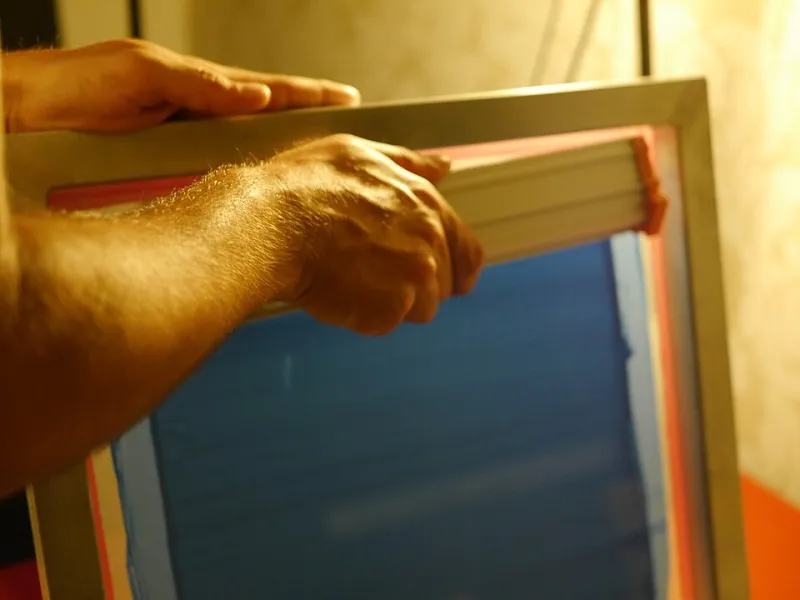
Photo: DinoSound4, CC BY-SA 4.0, via Wikimedia Commons
Let me tell you about the cheapest tank of gas I ever bought. It cost me a piece of artwork that, as far as I can piece together, made somebody else somewhere north of fifteen grand.
This is a confession, but it's also a warning label. If you make things—paintings, logos, album covers, anything someone else can put on a shirt—read this before you sign anything with a smile attached to it.
The Offer That Sounded Like a Compliment
A few years back, a band out of Columbus—decent guys, decent hooks, maybe 4,000 monthly listeners at the time—hit me up about a design I'd posted online. They wanted to use it as the cover for their EP and, quote, "on some merch stuff if that's cool."
"We can't pay much," the email said, "but we'll throw you gas money, tickets to every show, and honestly the exposure alone is huge right now."
Here's the part I still wince at: I said yes. Not because I was naive about money—I'd already done my pay-what-you-want experiments and my price-tag negotiations by then. I said yes because the exposure pitch is engineered to feel like a favor. They weren't asking for my art. They were offering me their audience. Or so it felt.
I got $60 in a Venmo with a gas pump emoji. That's the whole transaction, as I understood it.
What I Didn't Read
There was a contract. A real one, two pages, sent as a PDF that I opened on my phone while walking to the corner store. If you've ever tried to read a licensing agreement on a cracked iPhone screen, you know exactly how this goes: you skim, you see words like "non-exclusive" and think, fine, they're not locking me in, and you tap agree.
Except. Buried in paragraph four was the phrase "in perpetuity, throughout the universe, in all media now known or hereafter devised." They had full rights. Not shared rights. Not credit-with-a-link rights. All of them. Forever. My design legally belonged to the band the moment I hit send on that reply.
I didn't notice until eighteen months later, when a friend texted me a photo from a gas station outside Nashville: their EP cover—my design—on a billboard promoting a festival slot. I hadn't been told. Why would I be? They didn't have to.
Where the Artwork Actually Went
After the billboard, I did some sleuthing, mostly out of masochism. In the two years after I "sold" it for bus fare:
- Tour merch. Three runs of shirts and hoodies across two tours. At a conservative $12 margin per unit and a few hundred units per run, that's real money. Not mine.
- A Spotify canvas and banner for the EP's biggest single, which did about 900,000 streams.
- A festival sponsorship deck, where my design sat next to a logo for a beer brand that definitely has a bigger budget than I do.
The band did nothing wrong, legally. That's the part that took me longest to accept. They asked, I agreed, the paper said what the paper said. The system worked exactly as designed—and the design of the system is the problem.
The Plain-English Terms I Demand Now
I'm not anti-exposure. I'm anti-vague. These days, before I shake any hand, I want five things spelled out, and I'd encourage every creative to want the same:
1. Scope. What exactly is the art being used for? "Merch stuff" is not a scope. "EP cover, vinyl variant, and t-shirts through December 2025" is a scope.
2. Duration. Perpetual is a four-alarm word. Two to five years with a renewal option is normal. If they want it forever, that should cost like forever.
3. Territory and channels. US-only? Digital only? A Spotify banner in a territory you've never sold a print in shouldn't be bundled in for free.
4. Credit. If they won't grant rights back, they can at least contractually put your name on the work. Credit compounds; a one-time fee doesn't.
5. A rate card for expansions. Billboard use, national campaigns, sponsorships—each of those is a new use, and new uses get new invoices. Put it in writing so you're not the jerk renegotiating after the fact.
And the meta-rule underneath all of them: never sign rights paperwork on your phone. Print it. Read it twice. If a deal can't survive a second read, it wasn't a deal—it was a harvest.
What I'd Do Over
Honestly? I'd still work with that band. The music was good, the guys were decent, and the collaboration was worth doing. What I'd change is the shape of the yes: a flat fee for the EP cover, a separate license for merch with a per-run royalty, and a sunset clause on everything else.
The $60 wasn't the insult. The insult was that I let "exposure" stand in for a contract, and then a billboard had to teach me the difference.
Don't let a gas pump emoji buy your universe clause. The universe, it turns out, is where all the money was.