Spin Cycle Sales: Why My Best Gallery Opening Smelled Like Fabric Softener
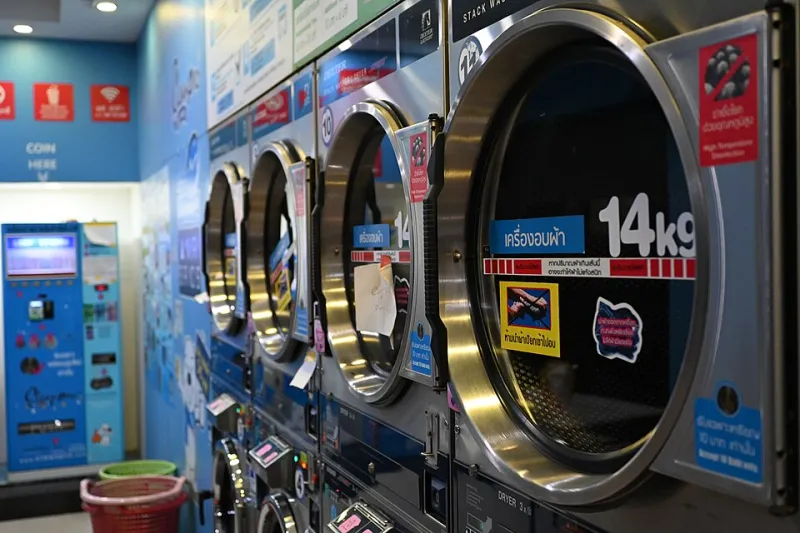
Photo: PattayaPatrol, CC BY-SA 4.0, via Wikimedia Commons
The rejection email was number eleven. I remember because I'd started keeping a tally in a notebook, which is either healthy self-awareness or the beginning of a villain origin story. This one came from a gallery I'd been courting for eight months, and the phrasing was classic: "Your work is strong, but we don't feel it aligns with our current program." Current program. Eleven rejections. Not one sale from any gallery wall I'd ever graced.
So I hung the whole show in a laundromat.
The Venue Was a Coin-Flip Decision That Wasn't
I do my laundry at the Sudsy Duck on Third Street, a 24-hour spot with flickering fluorescents, a change machine that eats fives, and—this is the key detail—an owner named Marisol who got tired of me sketching in the plastic chairs. One night she said, "You always drawing something? Put it up on the wall, it's ugly in here anyway."
I think most artists would laugh that off. I drove home, sat in my studio, looked at eleven rejection emails and forty finished paintings leaning against the wall doing absolutely nothing, and made a list of everything the Sudsy Duck had going for it:
- Foot traffic. Genuinely hundreds of people a week, all of them stuck there for 35 to 60 minutes.
- Captive attention. You cannot leave mid-spin. Your phone is at 4%. You will look at my painting.
- Zero gatekeeping. No submissions, no jury, no "current program."
- Free rent, in exchange for me repainting the back hallway, which took one weekend.
Galleries get maybe a hundred intentional visitors on opening night and a trickle after. The Duck got every shift worker, every college kid, every parent with three loads of toddler sheets. All week. For free.
Installing a Gallery Above Industrial Dryers
The logistics were dumber and harder than I expected. Dryers vibrate, so I used French cleats instead of sawtooth hangers—two bolts each, rated for way more than a painting weighs. Everything sat above the machines at about 78 inches, high enough to clear the heat but low enough to actually see.
Heat was the real problem. The wall above the dryers hits 95 degrees on busy nights, so I kept anything on paper or in delicate frames on the cooler side of the room and put the canvases in the hot zone. Acrylic handles heat fine. Your ego does not, when a dryer eats someone's sock and they yank it out from under your most expensive piece at eye level.
I also had to write a real one-page agreement with Marisol. Nothing fancy—commission split (10% to her, way gentler than the 50% galleries take), who handles money, what happens if a painting gets splashed with detergent, insurance, how long the show runs. Twenty minutes at her kitchen table. Compare that to the contract clause that ended my last retail arrangement.
Pricing Art in Quarters
Here's where I stumbled into the smartest thing I've ever done. The change machine dispenses quarters. People had quarters. So every piece got a price tag that worked with the machine: $12.75, $31.50, $68.25. I rounded nothing. It looked like a gimmick. It was actually a conversion tool—nobody at the Sudsy Duck had to feel like buying art was an event. They emptied the cupholder into a ziplock bag and handed it to Marisol.
I also did one thing galleries would hate: I priced small pieces at literal laundry money. $4.25 minis, postcard-sized studies. The cheap stuff was an audition. Twenty-two people bought a mini first and came back for something bigger before the show closed. One woman bought three minis over two weeks, then dropped $425 on the big dryer-wall piece on a Tuesday.
Three Weeks, Real Numbers
Let me put receipts on the table, because that's the only kind of advice worth reading:
- 14 paintings sold, plus 31 minis
- Roughly $2,900 total, which beat my previous two years of gallery-included sales combined
- Zero openings, zero wine, zero artist talks
- Two commissions came from people who saw the show while washing comforters
- One commercial client—a laundromat chain owner, no joke, who wanted art for all four of his locations
And the audience was the part no gallery ever gave me. People who had never once set foot in an art space stood in front of my work for forty minutes at a time because their bedding was still wet. They weren't performing connoisseurship. They'd just look, and some of them liked what they saw, and some of them had $12.75.
The Playbook for Finding Your Own Laundromat
Since that show, I've helped three artist friends pull off versions of this in a barbershop, a taco truck window (small pieces only, trust me), and a hardware store. The method repeats:
1. Hunt for dwell time, not aesthetics. Any business where customers wait—laundromats, auto shops, urgent care waiting rooms, dispensaries, diners. Waiting is the product. Art fills the wait.
2. Pitch the owner's problem, not your art. Nobody cares about your vision. Marisol didn't hang my show because she loves abstract work. She hung it because her walls were ugly and it cost her nothing. Lead with: free decor, a story for their customers, zero work for their staff.
3. Write the one-pager anyway. Even for a friend. Commission, money handling, damage, duration, who owns the wall nails. Twenty minutes now prevents the friendship-ending conversation later.
4. Make payment frictionless and weird. Quarters worked because they matched the venue. At the hardware store, my friend priced everything in screw and bolt quantities. Match the money to the room.
5. Put a QR code on every tag. Half my sales after week one came from people photographing a piece, scanning the code, and buying the print version later. The laundromat was the gallery; the internet was the register.
6. Document everything. I shot the whole install on my phone—paintings vibrating above spinning dryers, a guy in a hairnet studying one for a full cycle. That footage got me into two actual juried shows, because a laundromat exhibition is a story and a white-wall hang is not.
What Eleven Rejections Were Actually Teaching Me
Here's the part I had to learn the slow way: those galleries weren't wrong about my work, and I wasn't wrong to submit. They were just measuring me against the wrong market. A gallery sells to collectors who came specifically to buy. A laundromat sells to humans who came specifically to wash clothes and left with a painting anyway. Guess which crowd is bigger.
The Sudsy Duck show closed in March. Marisol asked me to leave four pieces up permanently because customers kept asking if they were for sale. They are. The price tags still have quarters in them.
Somewhere out there is a room with bad lighting, a change machine, and hundreds of bored people a week. Go find it.