In Defense of the Half-Finished: A Case for Creative Quitting
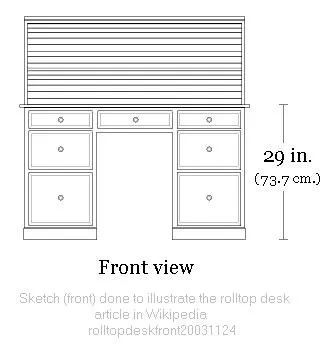
Photo: AlainV at en.wikipedia, Public domain, via Wikimedia Commons
Right now, in my studio, there is a mural sketch that's been "almost ready" since March. There's a four-track EP with one song finished and three songs that exist as voice memos recorded while driving. There's a logo redesign for a business that doesn't exist yet, for a friend who hasn't asked for it. And there's a half-sanded chair I'm refinishing because apparently I needed a fourth front.
For years, I treated this like a character flaw. I read the productivity books. I made the task managers. I downloaded the app that shames you with a cartoon plant. None of it stuck, because none of it was built for a brain like mine—and maybe like yours.
Here's my unpopular opinion: the compulsive novelty isn't the problem. The shame about it is.
Finishers and Starters Are Different Species (and Both Are Useful)
Our culture worships finishing. "Done is better than perfect." "Winners finish." There's a whole industrial complex dedicated to dragging you across the finish line of projects you no longer care about.
But think about what finishing actually requires: sustained attention on something whose interesting problems have already been solved. For some people, that's where the satisfaction lives. For others—creative restless types—the energy was in the discovery. The last 20% of a project is often just the first 20% with worse lighting.
I'm not saying never finish anything. I'm saying the reflex to finish everything is as dysfunctional as the reflex to finish nothing. Both ignore the actual question, which is: is this project still earning its spot on the desk?
The Body of Work Hiding in Your Abandoned Folder
Here's the reframe that changed everything for me: your unfinished projects are not failures. They're a research and development department.
That mural sketch from March? Two of its color experiments showed up in a commission I did in June. The EP's three voice memos? One of them became the best song on a different release. The logo for the business that doesn't exist? It taught me a technique I now use in paid client work.
Nothing was wasted. It just wasn't finished on schedule—and "on schedule" was a deadline I invented to make myself feel organized.
Serial starters generate raw material at a rate finishers can't imagine. The trick is to stop thinking of your open projects as debts and start thinking of them as an inventory. You're not behind. You're stocked.
How to Quit Like a Professional
There's a difference between abandoning a project and strategically retiring one. Here's my three-question test, refined over many, many abandoned projects:
- Am I avoiding hard work, or has the work stopped paying? Boredom in the middle is usually resistance—push through. Boredom at the concept level means the idea was a sketch, not a project, and it did its job already.
- Would finishing this cost me a better idea? Time is the only non-renewable studio resource. Every hour on a dead project is an hour not spent on the one that's alive.
- Can I harvest it? Before anything gets shelved, I strip it for parts—colors, chord progressions, copy, compositions. The project dies; the ideas get redistributed.
And here's the rule that keeps the guilt away: I'm allowed to quit anything, but I have to name what I'm taking with me. It turns quitting from an ending into a transfer.
The Only Thing You Actually Must Finish
One caveat, because this philosophy can curdle into excuse-making fast: ship something regularly. Not everything. Something.
For me it's one finished piece a month, minimum—any medium, any scale. That's the discipline layer under all the restlessness. It proves to clients, to the algorithm, and mostly to myself that the novelty-chasing machine can, in fact, deliver. Everything else stays open, gets raided, or quietly retires with honors.
So if you're the person with a mural, an EP, and a rebrand all in the same week: the problem was never you. The problem was believing you were supposed to be a finisher. Some of us are farmers—we plant in every direction, harvest what ripens, and let the rest compost into next season's work.
The chair, by the way, is done. It took eight months. It looks incredible. And I abandoned two better ideas to finish it, which is exactly the kind of decision this article exists to help you forgive.