The Used Car Negotiation: Confessions of an Artist Who Finally Put a Price Tag on the Work
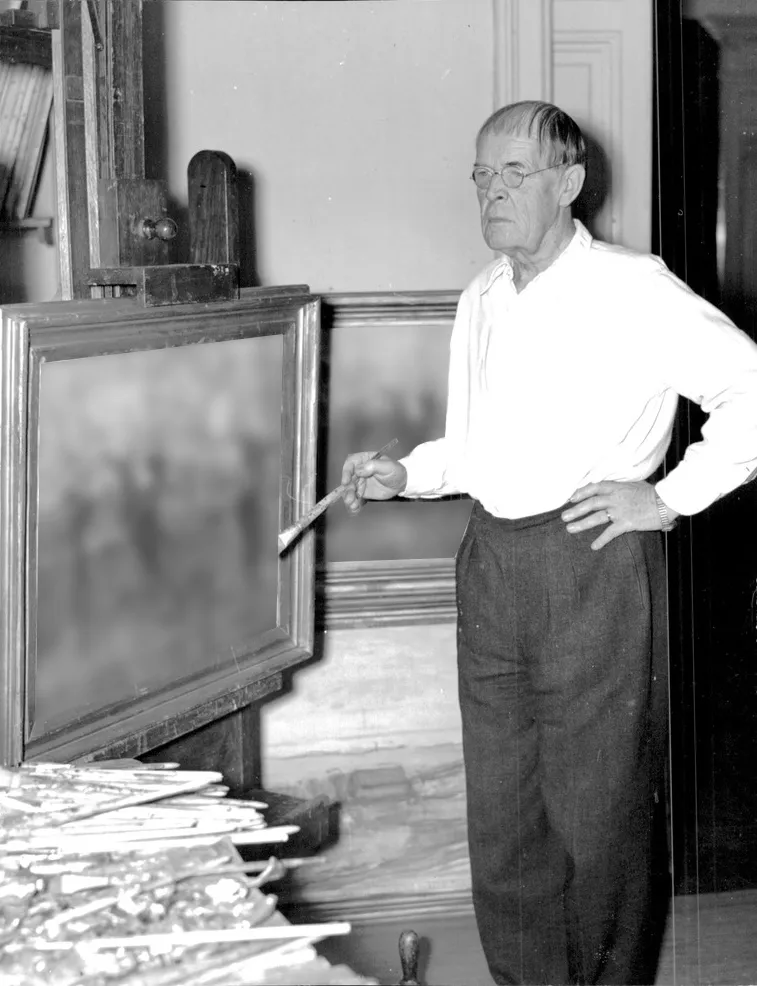
Photo: Unknown photographer, Public domain, via Wikimedia Commons
There's a specific kind of nausea that hits when someone asks, "So... how much?" about a piece you spent three weeks on. I know it well. I've felt it in a coffee shop in Portland, over a phone call with a client in Atlanta, and once — memorably — in a guy's garage next to his boat, where he circled one of my paintings and asked if I'd take $150 because "it's basically a print, right?"
It was not basically a print. It was 24 by 36 inches of oil on canvas, and I had underquoted it so badly out of nervousness that he was actually offering me less than what I'd already agreed to. That's the kind of pricing instinct you develop when you go from hobbyist to professional with no manual. This is my attempt at the manual I wish I'd had.
The Undercharging Trap (And Why It Feels Noble)
Early on, I priced low on purpose. I told myself it was strategy — get my name out there, build a portfolio, be the affordable option. What actually happened was worse than losing money. Cheap prices attracted cheap clients. The people who found me because I was a bargain were the same people who'd ask for "one tiny revision" four times, then a different color palette, then a completely new concept "since we're already in there."
That's scope creep, and it will eat you alive if your price doesn't have a spine. Here's the uncomfortable truth: raising my rates didn't just fix my bank account. It filtered my inbox. The clients who pay real rates tend to respect real process.
Three Pricing Models, Three Very Different Lives
I've used all of these, and each one shapes the client relationship differently.
Flat fee. You quote one number for the whole project. This is my default now. Clients love it because there are no surprises, and you love it because every hour you save by being efficient is money back in your pocket. The catch: you have to define the scope in writing. Number of concepts, number of revisions, delivery date, usage rights. If it's not in the agreement, it's not included. I learned this the expensive way.
Hourly. Fair in theory, awkward in practice. Clients get nervous watching the meter run, and you get punished for being fast. I only use hourly now for open-ended work — consulting, weird one-off jobs where nobody knows the scope yet. If you go this route, track your time honestly and give a not-to-exceed cap so nobody panics.
Licensing. This is the one most artists sleep on. Instead of selling the artwork outright, you sell permission to use it for a specific purpose, for a specific time. A band might license a piece for an album cover, a brewery for a can label. You keep ownership, they get usage, and you can license the same image again. It took me two years to understand that selling all rights to everything was like selling the land instead of renting the field.
The Used Car Incident
Back to the garage. This guy spent twenty minutes on my painting the way a buyer kicks tires — pointing out a brushstroke he didn't love, mentioning a cousin who "does digital stuff for way less," offering to pay in installments he'd invent on the spot. I wanted to crawl into my own canvas.
What I did wrong: I hadn't anchored my price confidently, so he sensed wiggle room that honestly didn't exist. What I do now: I state the number, explain briefly what it covers, and then stop talking. Silence is a pricing tool. Whoever fills it first usually loses ground.
I didn't sell him the painting. A month later, a restaurant owner bought two pieces at full price and didn't blink. The market is not one person haggling in a garage.
Hard-Won Rules for Going Pro
- Price the work, not your self-worth. Your rate is a business decision informed by materials, time, and market — not a referendum on whether you're talented.
- Use a simple formula to start. Materials + hours × a rate you can live with + a margin for overhead. Adjust from there. Any formula beats vibes.
- Deposit, always. Fifty percent up front, non-refundable. Clients who won't put down a deposit are telling you something. Listen.
- Revisions are a finite resource. Two rounds included. Extra rounds are billable. Say it cheerfully and it lands fine.
- Raise rates for new clients first. Grandfather the loyal ones. Nobody worth keeping will flinch at a fair increase.
- Write everything down. A two-paragraph email confirming scope has saved more friendships and invoices than I can count.
The Part Nobody Warns You About
The emotional mess doesn't fully go away. I still feel a twinge quoting four figures for a piece. But I've reframed it: the price isn't a judgment of my soul. It's the cost of years of practice, supplies, failed attempts, and the guarantee that I can keep making things. When someone pays it, they're not buying paint and canvas. They're buying the fifteen years it took to get here.
And that guy with the boat? Last I heard, he bought a mass-produced print at a big-box store. Everybody got exactly what they were willing to pay for.